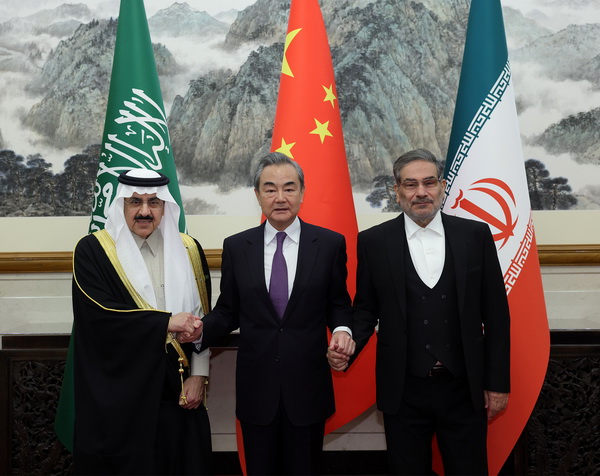
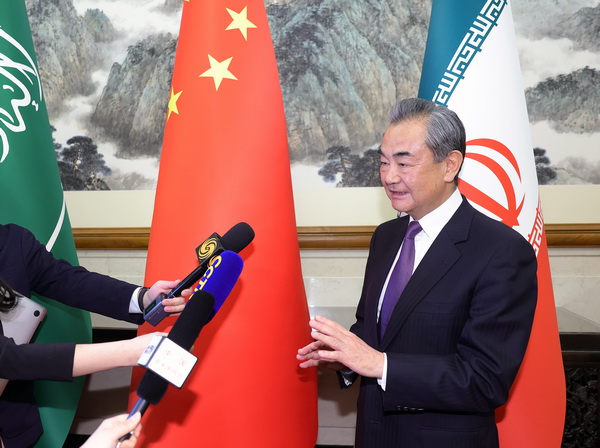
China was seen as a trader in the Middle East, not a broker. The handshake in Beijing on 10 March 2023, with the Saudi and Iranian security chiefs reconciling across Chinese Foreign Minister Wang Yi, was the clearest evidence yet that this had stopped being true.
Behind a short trilateral statement, the Saudi National Security Advisor and the Secretary of Iran’s Supreme National Security Council shook hands across Wang Yi, with the three national flags arranged behind them. Wang told the press the agreement was “a victory for dialogue and a victory for peace.” Whatever its long-term substance, it was a moment few would have predicted of China even a decade earlier.
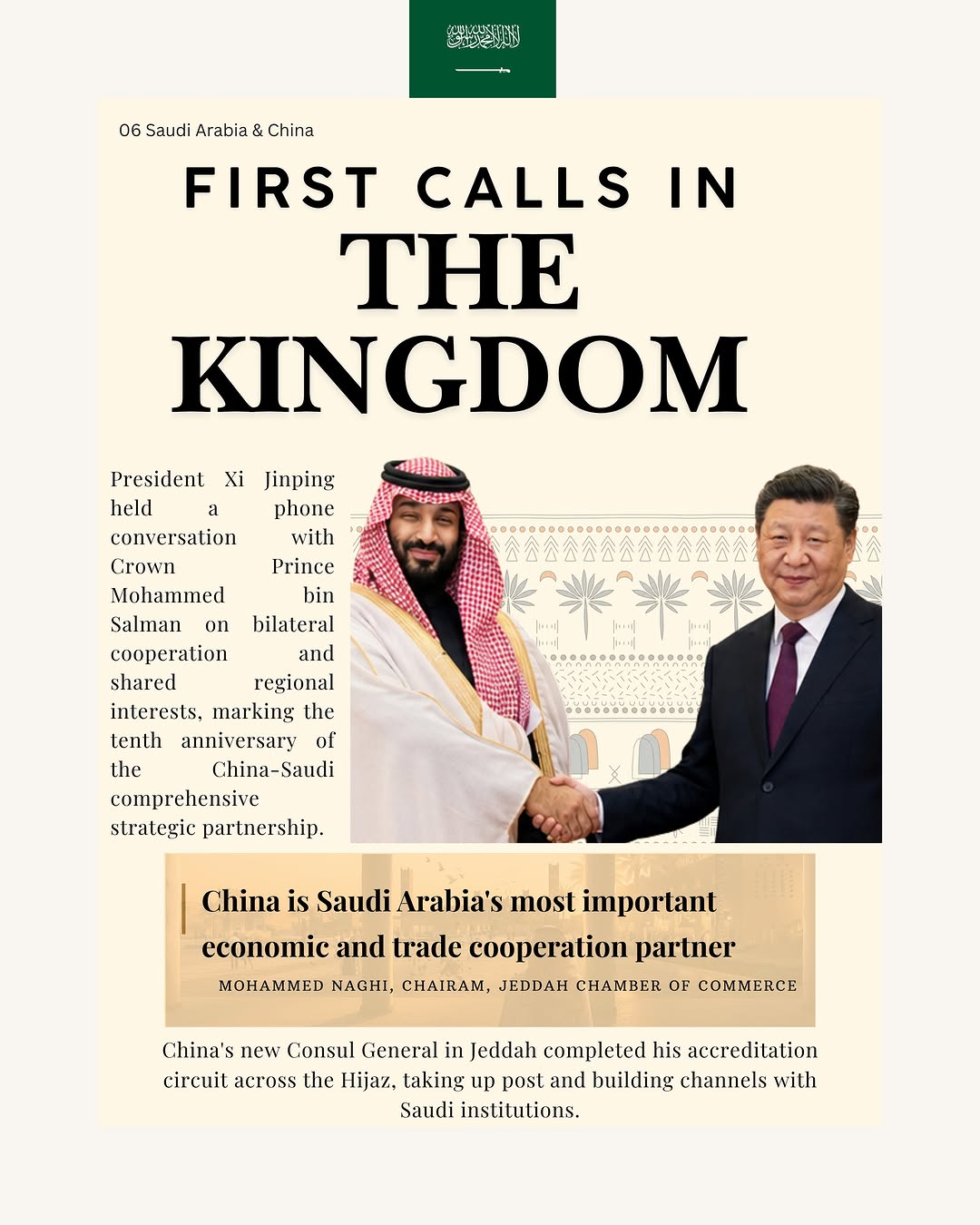
China’s presence in the region today rests on trade, energy, and diplomacy. The trade relationship is the longest-running and the most measurable, with China holding the position of the GCC’s largest trading partner for several years, and both the UAE-China non-oil number and overall Saudi-China trade crossing $100 billion in 2025. Energy follows closely, since roughly a third of Chinese crude imports come through the Gulf, and Beijing remains the largest single buyer of Iranian oil. The diplomatic track is the most recent addition, taking shape in Foreign Ministry calls with Gulf counterparts, ambassadorial op-eds in the regional press, and a UN Security Council vote in April on the Bahrain-led Hormuz resolution. The 2026 conflict between the United States and Iran has tested all three at once.
Few other powers can claim to be the GCC’s largest trading partner and Iran’s largest oil customer at the same time. None talks to both at the working level the way Beijing does.
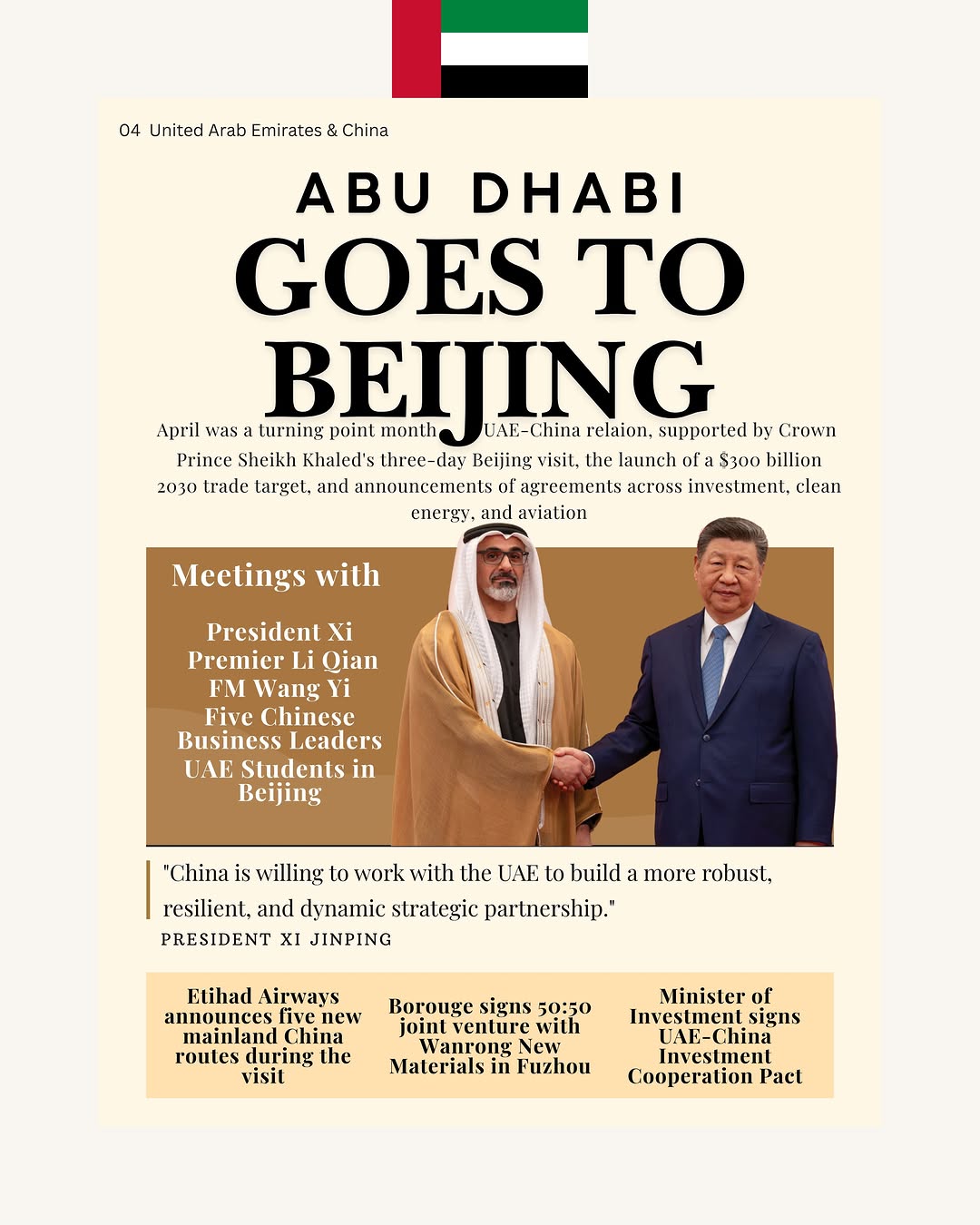
The April conflict prompted China to put its existing positions to use. Beijing and Islamabad opened with the Five-Point Initiative, calling for an immediate ceasefire, civilian protection, and a settlement grounded in the UN Charter. A week later, during Crown Prince Sheikh Khaled’s state visit to Beijing, Xi Jinping delivered his own four-point Middle East proposal: peaceful coexistence, sovereignty, the international rule of law, and balanced development and security. Chinese ambassadors across the Gulf spent the rest of the month publishing op-eds in regional newspapers laying out the same framework. Wang Yi told the UAE Special Envoy in person that a blockade of the Strait of Hormuz “does not serve the common interests of the international community.”
What is striking about Beijing’s response is what it has avoided: no naval deployment, no public commentary on the choices made by individual Gulf states, no military commitment to any party. Where China has acted, it has acted through institutions: UN voting, bilateral channels, public statements written for several audiences at once.
None of these positions are new in themselves. China’s stated principles for the Middle East, non-interference, freedom of navigation, peaceful settlement, and refusal of alliances that would pull it into outside conflicts, date to the 1980s and have held steady through every regional shock since. What has changed is the weight that comes behind them, since five years ago a Chinese statement on the Strait of Hormuz read as commercial, while today the same words read as policy.
View this brief on Instagram →